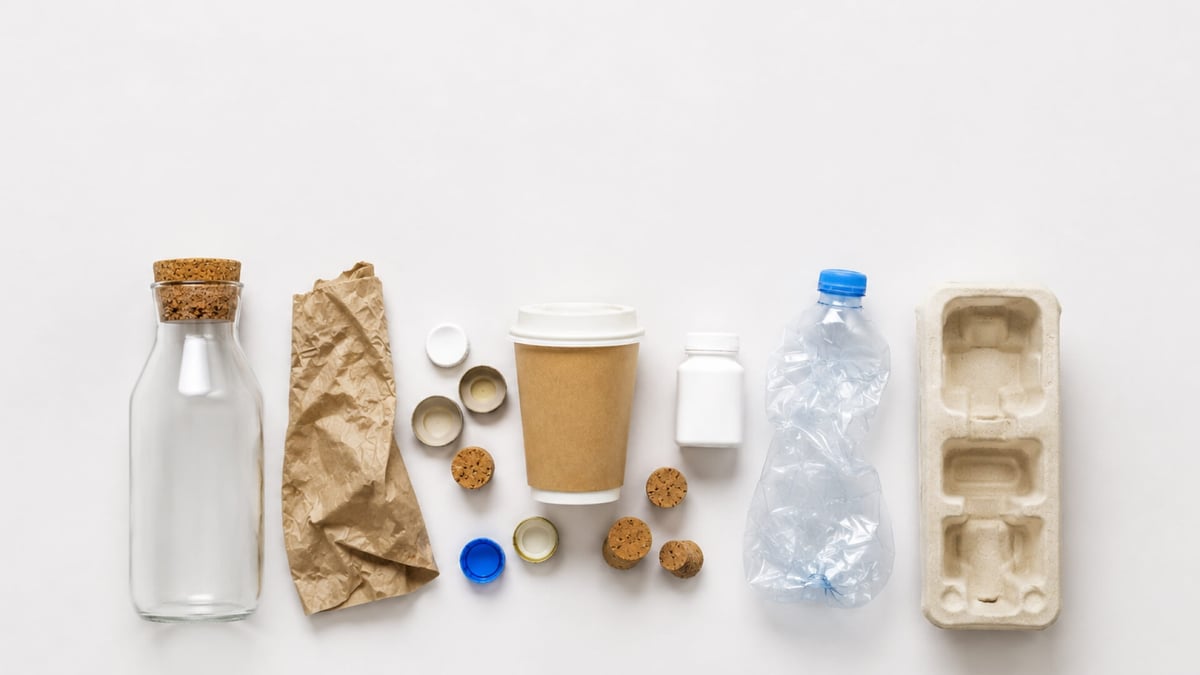
The EU's new Packaging and Packaging Waste Regulation, PPWR, is one of the most far-reaching overhauls of European packaging legislation in thirty years. It affects virtually every company that sells, imports, or distributes packaged goods on the EU market – regardless of industry or where the company is registered.
PPWR (Regulation (EU) 2025/40) entered into force on 11 February 2025, with most provisions applying from 12 August 2026. Unlike the previous directive, PPWR is a regulation, which means the rules apply directly in all EU Member States. Since many of the requirements depend on supplier data, documentation and processes that take time to establish, there are good reasons to start preparing now.
What is PPWR?
PPWR replaces the previous Packaging Directive (94/62/EC) from 1994 and brings the rules together in a single, directly applicable regulatory framework for all 27 EU Member States. Its purpose is to reduce packaging waste and move the market towards a circular economy by preventing unnecessary packaging, promoting reuse and ensuring that packaging can actually be recycled.
The goal is for all packaging placed on the EU market to be recyclable in an economically viable way by 2030, while specific reuse requirements will also be introduced for certain packaging categories.
The regulation forms part of the European Green Deal and contributes to the EU’s ambition of achieving climate neutrality by 2050. Packaging is therefore no longer simply a design and logistics issue, but an important part of corporate sustainability management and regulatory compliance.
Who is affected by PPWR?
PPWR applies to all packaging placed on the EU market, regardless of material or origin. This means that virtually every actor in the value chain is affected, including manufacturers, importers, distributors, brand owners, retailers, e-commerce businesses and digital platforms. The rules also apply to companies outside the EU when their packaging or packaged products are placed on the EU market.
The key requirements under PPWR
- Recyclability. From 2030, all packaging must be designed for recycling and meet a recyclability performance grade of A, B or C. The requirements will then become stricter towards 2035 and 2038.
- Recycled content. Plastic packaging must contain a minimum share of recycled material – for example, at least 30% in contact-sensitive PET packaging by 2030 – with higher targets towards 2040.
- Reduced material use. Packaging must be minimised, empty space in grouped, transport and e-commerce packaging will be restricted, and features designed to make a product appear larger will be prohibited.
- Reuse. Reuse targets will be introduced for areas including beverage and transport packaging, starting in 2030.
- Labelling. Harmonised symbols for material composition and waste sorting will replace the current range of national symbols.
- Extended producer responsibility. Extended producer responsibility (EPR) will be strengthened through requirements for registration, reporting and financing – often with fees differentiated according to recyclability.
- Hazardous substances. From 12 August 2026, food-contact packaging may not be placed on the EU market if it contains PFAS above the specified limit values.
- Documentation. Companies will need to carry out conformity assessments, prepare technical documentation and issue an EU declaration of conformity.
A recurring theme throughout PPWR is that compliance is not only about doing the right thing – companies must also be able to demonstrate it. Without traceable data, proving compliance becomes extremely difficult.
Timeline – when does PPWR apply?
11 February 2025: The regulation enters into force.
12 August 2026: As a general rule, the regulation starts to apply. This includes requirements relating to PFAS and heavy metal restrictions, conformity assessments, technical documentation and EU declarations of conformity. The previous Packaging Directive is repealed, subject to certain transitional provisions.
12 February 2028: Requirements to reduce empty space in consumer packaging to the absolute minimum start to apply.
12 August 2028: Harmonised labelling of material composition on packaging and waste receptacles starts to be introduced.
12 February 2029: Specific labelling requirements for reusable packaging start to apply.
1 January 2030: Several major requirements take effect, including recyclability performance grades A–C, minimum recycled content in plastic packaging, certain bans on single-use packaging, reuse targets and a maximum empty-space ratio of 50% for grouped, transport and e-commerce packaging.
2035–2040: Requirements become progressively stricter, including recyclability at scale from 2035, the phase-out of recyclability grade C from 2038, and higher targets for recycled content and reuse by 2040.
Many details will be specified through forthcoming implementing acts, but the overall timeline is already established.
How will businesses be affected?
From an operational and financial perspective, PPWR will affect packaging design, material choices, purchasing and supplier collaboration. Companies will need to collect and structure data for each type of packaging and may face higher costs for new materials as well as differentiated fees for packaging that is difficult to recycle. Companies that fail to comply may face penalties, while those that have not collected the necessary data in time could end up with products that can no longer be sold.
At the same time, there are clear opportunities. Companies that stay ahead of the requirements can turn sustainable packaging into a competitive advantage, respond to customer demand and reduce costs by using less material. In that way, compliance can become a springboard for progress rather than a burden.
How can businesses prepare?
- Map your packaging – including materials, weight, recyclability and share of recycled content.
- Collect supplier data early so that you have traceable and auditable information.
- Identify gaps by carrying out a gap analysis against upcoming requirements and prioritising according to which requirements apply first.
- Engage suppliers and incorporate relevant requirements into contracts and codes of conduct.
- Establish processes and ownership that work over time, involving procurement, design, sustainability, quality and legal teams.
- Monitor compliance continuously as the requirements become stricter towards 2040.
A useful approach is to treat 12 August 2026 as the first major checkpoint and 2030 as a strategic milestone.
How can Stratsys help?
PPWR requires large amounts of packaging data to be collected, documented and monitored – for every type of packaging, over time and throughout the value chain. Managing this in spreadsheets and disconnected documents quickly becomes unsustainable.
With Sustainability Management in Stratsys, you can collect and quality-assure data, monitor requirements, document compliance with full traceability and establish clear governance – reducing manual work in the process. Many PPWR requirements depend on information from suppliers, such as the share of recycled material, which means companies need visibility and control across the entire value chain. Stratsys ESG Due Diligence can support this work, while PPWR also connects with sustainability reporting under CSRD. By bringing everything together in the same ESG Suite, you gain a complete overview and reduce duplicated work.
.jpg?width=600&height=600&name=iStock-1138669707%20(1).jpg)