Leadership is put to the test when pressure rises. The answer isn't reactivity — it's a controlled reset, with a leadership team that is prepared, aligned and systematic, according to Stratsys expert Lisa Sohlberg. Here are five ways to create stability when the political winds start to blow.
Few things test public sector leadership like an election year. As political winds shift, pressure mounts on operations and the entire chain of governance. One consequence is a growing risk of rumours, parallel interpretations and fragmented decision-making.
That's the view of Lisa Sohlberg, who heads Stratsys' products for quality, work environment and operational planning:
- An election year doesn't just bring new priorities — it brings shorter decision windows and a faster pace. The governance system needs to give a unified view of goals, responsibilities and ongoing initiatives, otherwise the organisation risks acting in parallel tracks. That leads to fragmentation and weakened execution, says Lisa.
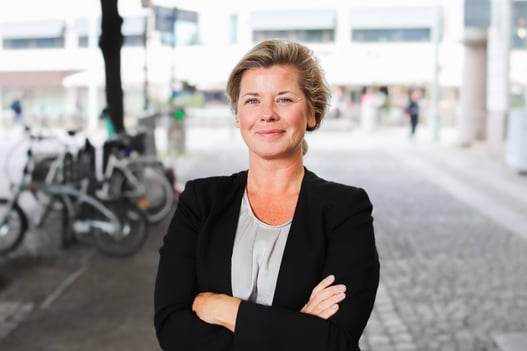
Lisa Sohlberg, Quality & Business Management Lead, Stratsys
The ability to lead matters most during turbulence. In the public sector, this isn't about resisting change or pushing back against it. Leadership's most important contribution, especially during election periods, is structure, professionalism and a holistic perspective. When leaders deliver on that, operations have what they need to do their job.
When capability is put to the test
In municipalities and regions, the chain of governance can be complex. Political decisions must travel through multiple layers — committees, administrations, operational areas and professional groups — before becoming action.
- During an election year, new priorities can arrive while existing assignments remain in place. That affects accountability, resource use and pace across the entire organisation. When the chain of governance holds together, you can weigh initiatives against each other and make sure decisions actually take effect in practice, says Lisa.
This becomes even clearer when political directions are reframed or reformulated during an election year. For operational units, it can mean new assignments, goals or priorities — placing high demands on leadership's ability to maintain coherence, prioritise and hold governance together.
In politically governed organisations, change isn't an exception to the system — it's part of it. During election years, several legitimate logics operate at once, which places particular demands on leadership's ability to hold the whole together.
A controlled reset
During an election year, directives can arrive in waves. Existing commitments get compressed to make room for new ones. Beyond the obvious risk of stress within the organisation, this can push leadership into reactive mode.
The answer isn't reactivity. It's a controlled reset, where the leadership team comes together to develop shared decision-making material. This makes it possible to surface consequences before direction is adjusted. Professional conduct in the civil servant role ensures political decisions can be carried out, even when the organisation is under heavy pressure.
- The civil servant role has the potential to act as a stabilising force during an election year. It's essential for keeping governance together and surfacing consequences, capacity and dependencies before decisions are put into action. That's how an organisation can act with unity and strength, says Lisa.
So what do we mean by professional conduct as a civil servant? It comes down to:
- Clarifying resources and capacity
- Identifying risks and goal conflicts
- Ensuring compliance, quality and work environment
- Creating a shared foundation for political decisions
By pausing, staying calm and pulling together as a leadership team, a controlled reset becomes possible.
Five ways to create stability when the wind picks up
Even in demanding situations, it's possible to safeguard organisational stability. Experience shows that certain approaches work better when conditions change quickly. According to Lisa, there are several principles leadership teams need to hold on to during an election year:
- A portfolio perspective. Looking at initiatives from a unified vantage point helps the leadership team weigh different operations against each other and prioritise. It becomes easier to separate what must function over time — such as statutory assignments, quality, work environment and legal certainty — from what can be reviewed, reprioritised or rescheduled.
- Make assignments visible. Shared, visual overviews of goals, assignments and ongoing initiatives can be vital support. It's an effective way to build a common understanding of what's underway and what different decisions actually mean in practice.
- Impact analysis. When new directives arrive, they need to be translated quickly into consequences — not through lengthy investigations, but as a natural first step in leadership's work. This leads to better decisions and clearer expectations.
- Protect stability. Some parts of operations can never be paused or compromised. This is where systematic work and clear follow-up make the biggest difference. Leadership needs to be explicit about where the boundaries lie and which risks are acceptable.
- Clear communication. This creates predictability and reduces the risk of rumours. Leadership needs to communicate what's fixed, what's being analysed, how priorities are made and when decisions can be expected.
Lisa emphasises that the portfolio perspective in particular is critical for avoiding reactivity:
- During an election year, it holds governance together as the pace picks up. You can see the connections between initiatives, resources and dependencies — how a change in one part of the system affects the whole. That makes it possible to prioritise with a focus on what can actually be delivered, says Lisa.
Prepared, aligned and systematic
Leading without losing your footing is entirely possible, even when the pressure peaks during election periods. But it depends on proper preparation. To lead through times of change, leadership needs to be prepared, aligned and systematic. That's the only way to secure structure and a holistic perspective. The election year puts that capability to the test.
- An election year reveals the difference between having a strategy and executing one. An organisation gains momentum when goals are linked to concrete activities, accountability is clear and follow-up is systematic. That's what keeps governance intact, even when conditions change, Lisa concludes.
Support for leadership teams
Stratsys helps public sector leadership teams bring goals, assignments and follow-up into a shared structure, even when pressure runs high. We make it easier to govern, prioritise and make well-considered decisions. Talk to one of our experts to explore what Stratsys can do for your organisation.