Bring control to scattered GRC work
Replace fragmented work and unclear ownership with structure, clearly assigned responsibility and a single source of truth.
Bring risk, information security and compliance into one scalable way of working — with clear ownership, impact-based priorities and resilience you can prove.








Why Stratsys for GRC
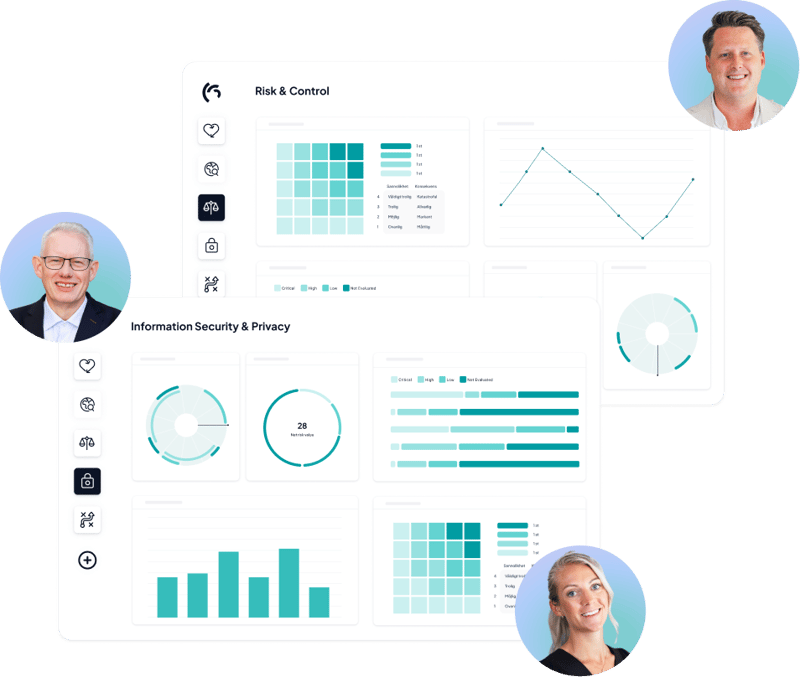
Too much GRC work still lives in spreadsheets, scattered tools and split responsibility. Stratsys is the GRC platform for moving from fragmented work to risk-led governance.
Replace fragmented work and unclear ownership with structure, clearly assigned responsibility and a single source of truth.
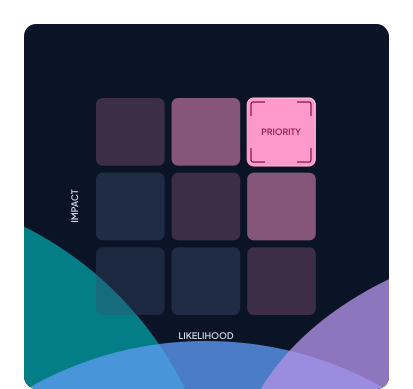
Connect GRC work back to the risk it's meant to reduce — so governance can mature from reactivity to prioritising by exposure, impact and business relevance.
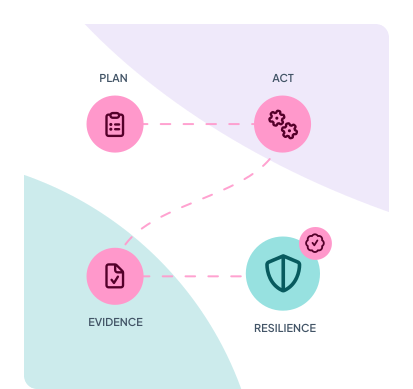
Turn structured intent into demonstrable resilience. Connect actions, evidence and progress so work moves from documented plans to proven practice.
Connect the work behind GRC with the oversight leaders need — making risk, progress and priorities easier to interpret, communicate and act on.
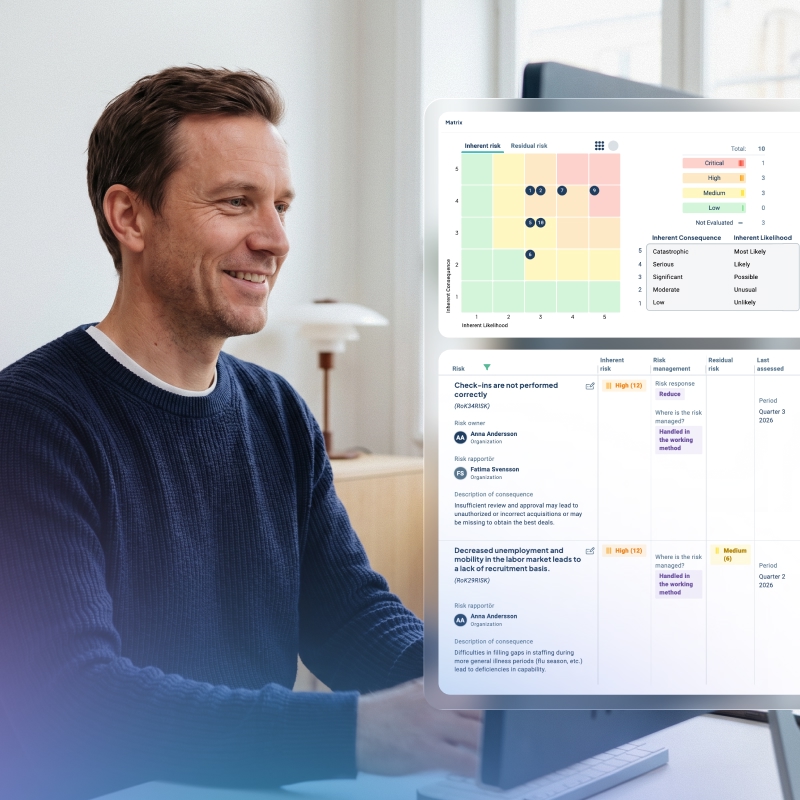
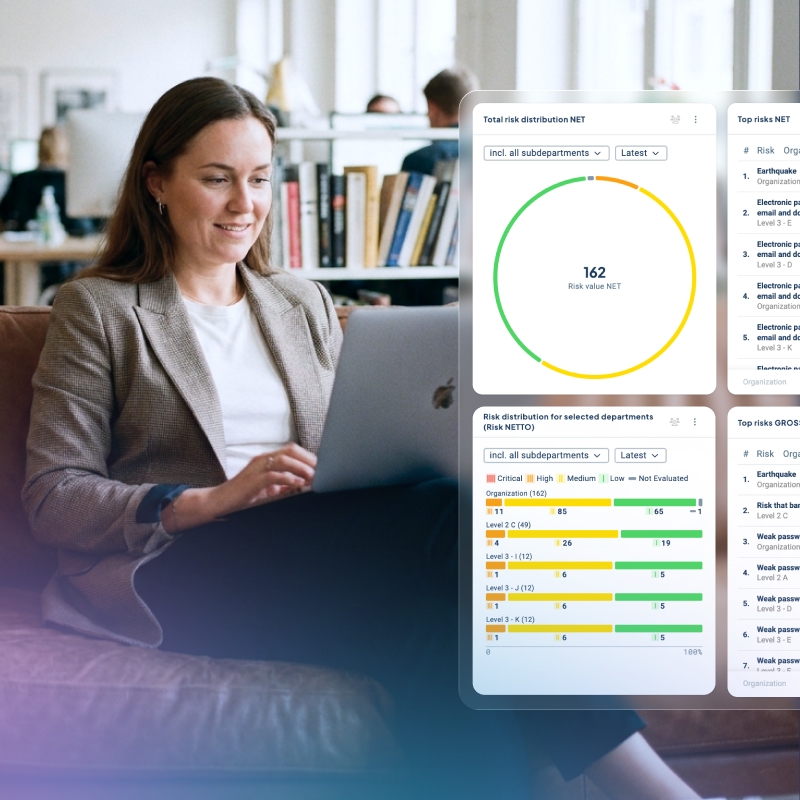
Whether you’re creating structure, scaling control or strengthening oversight, Stratsys helps you shape GRC around your organization’s maturity, responsibilities and governance needs.
Turn growing GRC demands into manageable progress.
Turn growing complexity into scalable GRC control.
Turn complex governance into connected oversight.

Ease of use was the most important factor. It's crucial that the system is simple to work in, so there's a short learning curve for those of us who'll be using it. We also wanted to be able to link our risks and incidents to processes rather than to silos in the form of units or departments.

Stratsys helps us bring information security, data protection, business continuity and supplier governance together in a clear and structured way.

It's become easy to keep track of where the latest information is. You can quickly find the information you need, and see in real time what's done and what isn't.
Products

Identify, assess and prioritise risks. Connect them to controls, actions, owners and follow-up — making risk management easier to coordinate and govern.

Structure requirements, controls, actions and evidence — with clearer ownership and follow-up across the organisation.

Assess supplier and third-party risks through a more structured process for questionnaires, assessments, risks and actions.
Extend your GRC setup with focused solution modules for the processes and responsibilities you need to manage.

Assess compliance risks and connect them to requirements, controls and mitigation activities.
Track audit findings, recommendations and corrective actions in one traceable process.
Plan and coordinate recovery actions to keep critical operations running during disruptions.
Map critical processes, dependencies and risks to strengthen preparedness.
Report, categorize and follow up incidents with clear ownership, actions and reporting.
Structure system registers, ownership, dependencies and management plans.
Assess risks and approvals before launching new products, services or business changes.
Regulatory solutions
Connect requirements to risks, controls and actions so GRC domains and regulations strengthen the same governance foundation instead of being treated as separate tracks.
Structure responsibilities, risk assessments, actions and follow-up related to NIS2 and cyber security requirements.
Support work around digital operational resilience, ICT risk, incident management and third-party risk.
Create a clearer structure for data protection work, including documentation, risk assessment and follow-up of actions.
Support a systematic approach to information security, gap analysis, controls and continuous improvement.
Stratsys AI
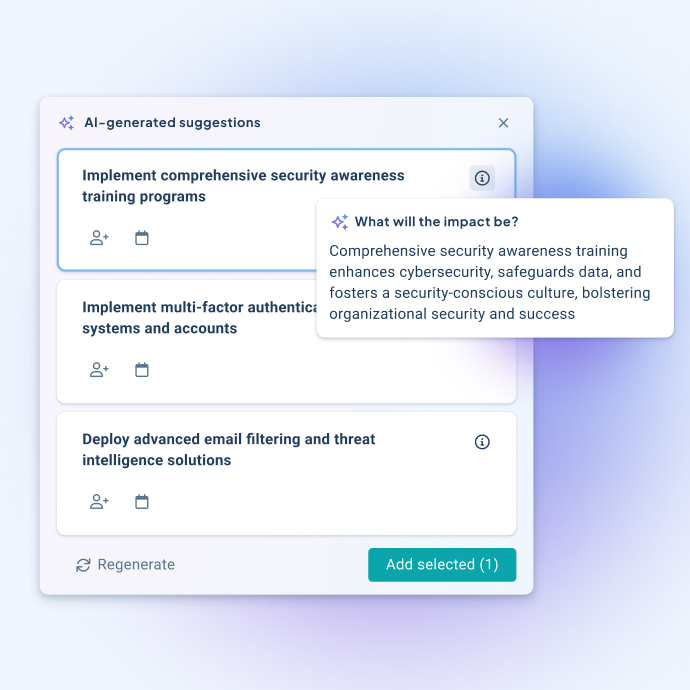
Stratsys AI strengthens governance, risk, and compliance by providing support for follow-up and analysis while reducing manual work.
Integrations & API
Cut down on manual work and improve data quality by connecting your risk, compliance, and security data from multiple systems into one place. With ready-made standard integrations and a flexible API, you get a solid foundation for more efficient GRC management - from data collection to reporting.
See Stratsys in action
Take a tour, ask your questions and see how it fits your organisation.


More data, more regulations and more parallel initiatives – yet it is becoming increasingly difficult to see what actually matters. When GRC work...

When organisations evaluate GRC tools, the discussion often turns to functionality: the number of modules, dashboards and workflows. It is a natural...

When no one owns the risk all the way through, it doesn't matter how good the analysis is. Many of the organisations we meet at Stratsys don't lack...